Thursday, January 29, 2009

What's a little brain damage between friends?

Ah, the big game is almost here. Wait, that should be in caps: The Big Game. No, wait — all caps: THE BIG GAME.

As we await the head-snapping, jaw-smashing violence of the Super Bowl — the best of which is sure to be replayed repeatedly in super slo-mo — let us consider that brain damage commonly associated with boxers has been found in a sixth deceased former N.F.L. player age 50 or younger — former lineman Tom McHale, who died in May at age 45.

And let us consider the response from Jeff Pash, the NFL’s executive vice president for labor:

“There are a great many people who have played football and other contact sports for many years and at high levels who do not appear to have suffered these types of deficits. Whether it’s President Ford or major business leaders, whether it’s people on television.”

Uh-huh.

Yes, indeed, there are people who have played football who don’t appear to have been affected. On the other hand, doctors at Boston University’s School of Medicine have now tested six former NFL players who died between the ages of 36 and 50, and all six have had serious brain damage.

Now, excuse the cynicism, but the NFL has a huge money-making enterprise to protect and a continuing need for the spare parts known as players, so pardon me for not buying the league’s objectivity. For an unbiased perspective, let's turn to Dr. Daniel P. Perl, the director of neuropathology at the Mt. Sinai School of Medicine in New York, who is not affiliated with the Boston University group. Perl told The New York Times that “This is a medically significant finding. I think with a sixth case identified, out of six, for a condition that is incredibly rare in the general population, there is more than enough evidence that football is clearly strongly related to the presence of this pathology.”

Pash said the league was continuing its own study of retired players, which began in 2007 and will probably not be published until 2011 or 2012.

Or maybe 2014. Or maybe 2020 …

Hey, let's keep the hits comin' and the money rollin' ...

http://www.nytimes.com/2009/01/28/sports/football/28brain.html

Seemed a fine idea at the time

OK.

You’re a second-year wide receiver. The numbers from your rookie season (20 catches; 4 TDs) aren’t bad, but they’re hardly enough to give you job security — especially on a team that already has serious image problems.

So you decide to make a profane YouTube video with language hurtful to blacks and gays?

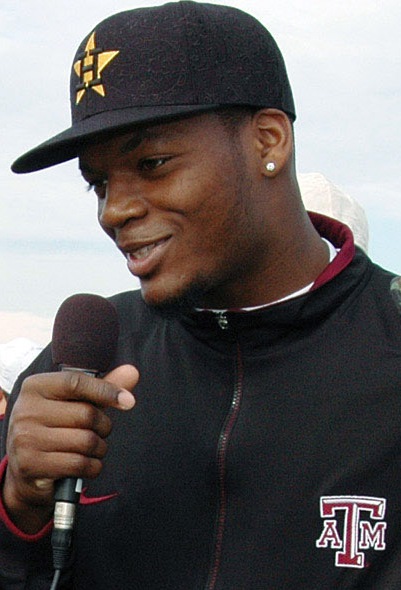
Well, you do if you’re Martellus Bennett of the Dallas Cowboys.

The video made with rapper Dessie Brown also referenced teammates Jason Witten and Tony Romo — and some fella named Jerry Jones.

(Notes to Martellus: Romo is the guy who throws you the football; Jones is the guy who signs your checks.)

Bennett, fined $22,000 by the Cowboys (the amount of a game check), immediately blamed the media for blowing the video out of proportion.

Which tells me young Martellus actually may be wiser than his years; blaming the media is a veteran move …

Mr. Blagojevich, meet Mr. Sampson


For sheer shamelessness, it’s hard to beat Kelvin Sampson.

After cheating — and getting caught — at Oklahoma University, he cheated again — and got caught — at Indiana, leaving the Hoosiers’ men’s basketball program in shambles.

Then to get him to go away quietly, Indiana had to pay him $700,000 — yes, $700,000.

Now, he’s appealing his discipline by the NCAA, which found Sampson had committed two major violations at Indiana and slapped him with a five-year show cause penalty — meaning that if Sampson applies for another position in the next five years, the college hiring him must explain to the NCAA why it should not be subject to penalties.

I’d also suggest the person making the hire be subject to exhaustive psychological evaluation.

Now, if Sampson loses his appeal, and doesn’t get another college job, all is not lost for him. With his morals and hubris, he can always move to Illinois and run for governor.

Are things starting to close in on you, Barry?

Thursday was NOT a good day for Barry Bonds, facing an upcoming perjury trial in March.

First, a source claims prosecutors have urine samples they say proved Bonds used steroids other than those known as “the cream” and “the clear” — the ones Bonds reportedly indicated he thought were “flaxseed oil.”

Then it’s learned that former San Francisco teammate and known juice Bobby Estalella is expected to testify and provide significant information that Bonds knowingly took the illegal substances.

Bonds, especially after he bulked up and slowed down, hit into a few double plays in his time, but this one — if completed — won’t send him to the dugout but to the slammer.

Friday column: Onward Christian coaching

Back in my days as an athlete, I never liked getting beat. But almost as bad as losing was winning too easily.

If it was clear there was no challenge, I would quickly get bored, my attention would wander, my effort would flag.

Not so for the Covenant School in Dallas, whose girls basketball team recently whipped, beat down, annihilated and (insert your favorite sports verb here) their “rivals” from Dallas Academy.

First quarter: 35-0. Fight on.

Second quarter: 59-0. Fight on.

Third quarter: 88-0. Fight on.

Fourth quarter: 100-0. We can hit triple digits!

As the magic number neared, Covenant coaches, players and fans got increasingly excited, and the team reportedly was still shooting 3-pointers in the final period. Dallas Academy coach Andrew Lott also claims that while Covenant coach Micah Grimes called off his full-court press early in the game, Grimes later instituted an alternative press.

“This is what it came down to in the second half,” said Dallas Academy athletic director Jeremy Civello: “Steal at half court and layup. Steal and layup. Steal and layup. It was a layup drill.”

Two things should be noted. One, Dallas Academy — a school that caters to students with learning disabilities — hasn’t won a girls basketball game in four years. Two, Covenant is a Christian school.

In light of the both notes, Kyle Queal, the headmaster for Covenant, called the 100-0 win “shameful,” saying, “This clearly does not reflect a Christlike and honorable approach to competition.”

Now, it’s clear to me 100-0 doesn’t reflect an honorable approach to competition, but the question of it being Christlike is more thorny.

If Christlike refers to the Jesus of the Sermon on the Mount and his injunction to “do unto others as you would have them do unto you,” well and good. Point taken.

But what if it refers to the Jesus that got after the Pharisees and Sadducees? I don’t recall any quarter being given there (“Woe to you, hypocrites!”). What if it’s the Jesus of the cleansing of the Temple, driving out the moneychangers with a whip made of cords? What’s if it’s the Jesus of the Second Coming, kicking butt and taking names?
Obviously, the cross-section of theology and high-school girls basketball is more complicated than the headmaster appreciates.

After Queal apologized to Dallas Academy, Covenant coach Grimes disputed the need for a mea culpa, claiming, “My girls played with honor and integrity.” For that, he was fired.

And as he didn’t — as far as I know — offer Scriptural support for his position, I expect the controversy over the game only to continue to rage. Which means that perhaps we can look forward to bumper stickers sprouting up in Dallas with the letters “WWJS?”

That stands, of course, for “What Would Jesus Score?”

Contact Jim Gordon at gjames43@msn.com.

Redemption, Part I

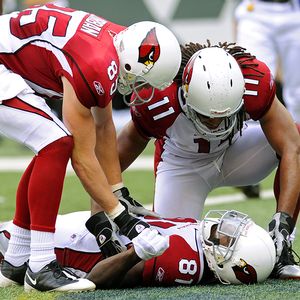
Recommended reading: Mark Maske’s Washington Post story on Arizona defensive tackle Darnell Dockett, who overcame an impoverished childhood, an early criminal streak and the shooting death of his mother to become one of the more inspirational stories of this year’s Super Bowl.

The person most responsible for Dockett’s turnaround is his uncle, who forced him into football, and the verb apparently isn’t too strong.

"Anybody in the world who knows my uncle knows he's crazy," Dockett said. "My uncle will punch you in your face with no remorse."

Dockett’s uncle is not arriving in Tampa until today. When Dockett tried to get his uncle to come to town early, to watch all the practices and enjoy the hoopla, his uncle said he had to work.

http://www.washingtonpost.com/wp-dyn/content/article/2009/01/28/AR2009012803926_pf.html

Redemption, Part II


More recommended reading: Scott Brown’s Pittsburgh Tribune-Review piece on Steelers wide receiver Santonio Holmes, who, like Dockett, used the Super Bowl platform to deal with some issues, including in Holmes’ case, his drug-dealing youth.

"If I continued down that path, I wouldn't be here," Holmes said Wednesday. "I've only told three or four people maybe throughout my lifetime about that, and at the moment I felt like it was time to share things."

In the piece, Pittsburgh tackle Willie Colon, who has some knowledge of life in the streets, offered this perspective on Holmes’ past:

"I don't think it's right to sell drugs at all," Colon said. "At the same time, when you look around and your brother's hungry and you've got holes in your shoes and your mother's working four or five jobs? You're going to do something."

While Holmes should be applauded for addressing his past, it should be noted his present isn’t exactly a clean slate. Holmes was arrested earlier this year and charged with misdemeanor possession of marijuana, Holmes said Wednesday that was an isolated incident.